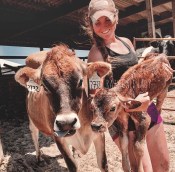
Welcome back to the blog!
It’s been a bit since I’ve last made a blog post.
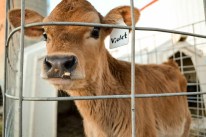
But I’ve been getting lots of questions about my calf hutches (pictures on instagram – @wiscowsingal) and since many people say calf hutches are “glorified dog houses” or “prison cells”. I thought I’d talk more in depth about them. Below are a few questions I’ve received on this topic and I have also made up a few questions because some people think they have ALL the facts BEFORE they even ask questions. So…

What is a calf hutch?
Form of housing for heifer (girl) and bull (boy) calves.
Are all calves kept in calf hutches raised for veal?
NO, both heifer (girl) and bull (boy) calves are housed in these hutches.
To read more about how veal calves are raised, check out this WEBSITE, or you can ask Heidi, a dairy farmer who raises her bull calves for veal on INSTAGRAM / FACEBOOK. Or you can follow and ask veterinarian, Dr. Hake on FACEBOOK.
 Why is a heifer calf kept in a calf hutch?
A calf hutch is not only beneficial for the calf itself, but for the care takers as well.
Benefits of a calf hutch include…
1. Individualized care for each calf. Whether it be feeding, bedding, treating, or vaccinating, hutches make it easier for the care takers to make sure each calf is getting exactly what they need.
2. Keeps calves from spreading or contracting a disease that could make them sick. Just like a newborn baby, calves don’t have an immune system built up yet. The hutches are washed, disinfected and sanitized after the older, weaned calves are moved out and before the new calf is put in.
 3. Easy to keep the calves bedded properly. In the warm summer months, we have a sand bedding (sometimes add pine shavings) and in the fall, winter, and spring we bed them with wheat straw.
4. Protects them from the elements. When its hot and humid, we’re able to open the windows and put blocks underneath/prop up the hutch to keep it ventilated while giving the calf shade. When its raining, snowing or really windy, the hutches keep the calf safe, dry and comfortable.
 5. Heifer calves are future dairy cows. Hutches are tools that help get calves off on the right foot. A clean, comfortable, and safe environment helps us keep our calves healthy, happy and thriving… AND in 2 years, we’ll have happy, healthy and thriving cows when they calve in for the first time!
Hutches just act like cribs. They aren’t prison cells.

Why is a bull calf kept in a calf hutch?
Same reasoning as the heifer calves. (Read above explanation.) Bull calves on the other hand are raised for beef. Check out my blog post, A Cow Calves, Now What? Part 3 for what happens to bull calves when they’re born on a dairy.
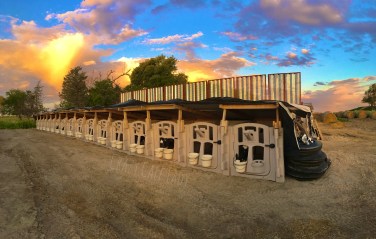
How long does a calf typically stay in a hutch?
Typically around 2 months. Depending on the farm and the demand for space, some keep them in a few weeks shorter and some keep them in there a few weeks longer than 2 months.
What does a calf do in a hutch?
Eat, sleep, poop, and GROW!
Are there different forms of calf hutches?
YES! See pictures below…
Polydomes: An enclosed circular dome with ventilation on the top or a circular dome with a door and calf is attached to hutch with a collar and chain.
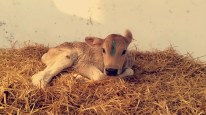
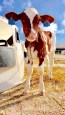


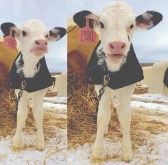
Calf hutch with wire panel: Calves are free range in their hutches. They have the ability to go outside and inside. Feed is either inside their hutch or on/near the fronts of the wire panels. Doors can be put on these hutches to keep warmth in and snow out in the winter. (First and last pictures taken at Dairy Carrie’s farm.)
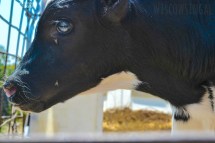


Calf hutches with chains: Calves are attached to their hutches with a collar and a chain. They have the same room to move as calves with wire panels do and can also roam from side to side of their hutch as well. Calves either have their feed inside their hutches or outside on the side of the hutch. Doors can be put on these hutches to keep warmth in and snow out in the winter. (I personally have found to have friendlier calves in these hutches. It’s easier to interact with them!)
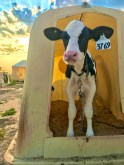

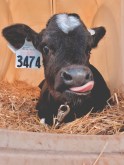

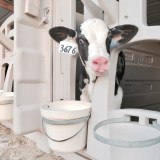
Individual pens: Same concept as a hutch, but this design is short and sweet. Looks like a box. It has 2 long walls which divide the pens, the back wall has either windows or a wire panel for ventilation, and the front is a door and also is where the calves eat. The design needs more attention when it comes to bedding and ventilation. Typically seen inside calf barns with fans or positive pressure ventilation tubes. We on the other hand have our pens outside with roofs we built and designed.


(I did not include pictures or descriptions of automatic calf feeders as those calves are housed in a group setting.)
I hope you learned something new today as far as individualized calf housing goes.
All of these pictures were taken by me as I have worked with all of these style calf hutches before.
Even though calves are separated from the cows and housed in these type of environments, they’re still happy. They still enjoy life. They don’t know living any other way, so they actually don’t know what else is out there. These hutches definitely are not comparable to life behind bars. Calves get to enjoy life. They get the care and attention they need and deserve.
Thanks for reading!
Sincerely,
The Crazy Calf Lady, Jenna
 I’m going to tell you the story of Fireball’s life. Fireball is one of the two full Jerseys on our dairy farm. The rest of the herd are all Holstein, except for one uh-oh cow that’s a red & white holstein-jersey cross!
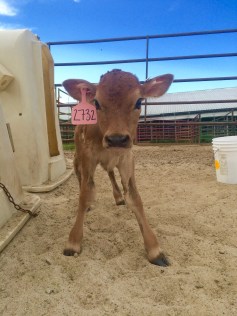 Shortly after she was born, we moved her into a little pen where we keep all of our newborn calves in. It’s right next door to the calving pen. (If you’re wondering why we separate the cow and the calf, be sure to go back and read
 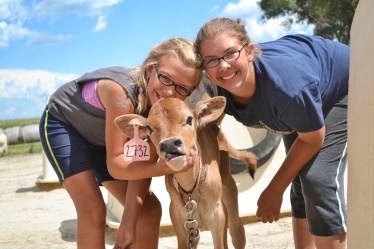 Once Fireball had eaten, received her eartags and was given her vaccine, it was time to weigh her with the weight tape and move her down to the individual hutches. Which is where we keep our calves from birth to around 2 months old. I kind of think of them as a crib for calves.
 On our dairy, we use hutches with a tethered chain and we have individual calf pens with a roof built over the top due to them being outside instead of in a calf barn.
 While Fireball was living in her individual hutch, she was getting fed whole, pasteurized milk twice a day (Yes, you read that right. We feed milk from our cows to our calves!) with access to water the rest of the day. She also had access to calf starter. It’s a type of grain mix that is specifically made for calves. Heifer calves are typically on milk for 6-7 weeks and then start to get weaned onto water. Usually when calves are getting weaned, they get fed milk in the morning and then only get fed water at night for a week straight. Once the week is up, they are switched to only water.
 Once the calves have outgrown their hutches after 2 months, we will then move them to super hutches! Super hutches are a great way for a calf to socialize. We house 4 calves together in one super hutch at a time. A super hutch is just what it sounds like. They are a giant hutch that has panels around it and also a feed bunk in the front! In the super hutches, we introduce the calves to hay and the calves will continue to get fed the same grain they were getting fed prior to moving. Here, they have access to water 24/7. [No milk is given to calves in the super hutches, they are all completely weaned at this stage.] We keep our calves in them for 2-3 weeks depending on if we have a lot of calves to move one week compared to another.
 A few weeks went by and Fireball was then ready to move into an even bigger pen with MORE friends. The bigger pens are where she will live for the next few months, until she is ready to head to the heifer growers. She was also weighed again when she moved up there and given a second eartag.
 When the calves are in the upper lots, they have a lot of room to run around and a lot of room to just nap. I mean, it’s hard being a calf..
 Fireball spent her days in those pens rejecting every treat I tried to bring her, such as Oreo cookies and Ritz crackers. She’s not a fan of sweets, unlike my Holstein calves who attack me with kisses until they get what they want. As Fireball got older, it was time for her to move on to the next chapter of her life. We sent her and 30 of her closest friends to her new destination in February of 2016.
 Her new destination was at the heifer growers, where she would live for the next year and 2 months. Some heifers are there longer than others depending on size or if we can’t get them bred to AI (artificial insemination). (I’ll make a blog about our heifer growers later.) For now, I’ll just explain it this way. We don’t have enough room on our dairy to house all of our animals, so we send them to people who can take care of them for the next chapter of their lives. Once the heifers are old enough and big enough, they will then get bred. After they are confirmed pregnant and have been carrying their calf for at least 7 months, it will be time for those girls to return to the dairy where they will live for the rest of their lives.
 And just in luck, Fireball’s year and 2 months were up just last week. She came home on Friday! We are patiently waiting for June 1st to roll around as it is her due date. Once she calves, she will be moved to the barns where she will eat, sleep, poop, ruminate and get milked. It is where she will stay for the rest of her time with us. If she has a heifer calf, she will then go through the same cycle Fireball went through growing up. If she has a bull… well I’ll just wait and explain that in Part 3 of A Cow Calves, Now What?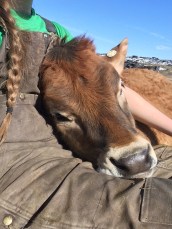


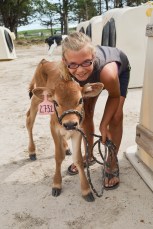
 Crazy calf lady